


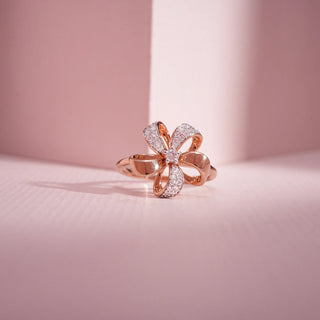
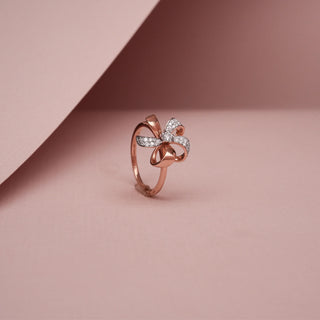


Lab Grown Diamond Rings
Every Reia ring is set with IGI- or SDI-certified lab-grown diamonds, in BIS hallmarked 14KT or 18KT gold. Solitaires, everyday bands, eternity bands, cocktail rings, designer pieces and engagement rings, in ten diamond shapes and three colours of gold. Filter the grid, or read on, and we will help you choose.
Trust strip, five items, directly under the intro:
-
IGI or SDI certified diamonds
-
BIS hallmarked 14KT and 18KT gold
-
Lifetime exchange and buyback
-
Free resizing
-
Five stores in Bengaluru, Coimbatore, and Guwahati
IGI / SDI certified diamonds · BIS-hallmarked 14KT and 18KT gold · EF colour, VVS clarity as standard · Free resizing and lifetime care · Cash on Delivery · Try them on in Bangalore, Coimbatore and Guwahati
A ring is the only piece of jewellery most people never take off. It goes to the office, into the washing-up, through airport security and twenty years of ordinary mornings. So a ring has to survive being worn, not just being photographed.
Straight Answers
What is a lab-grown diamond ring?
A ring set with a diamond grown in a laboratory rather than mined. The stone is a real diamond: the same pure carbon, the same crystal structure, the same 10 out of 10 hardness, the same sparkle. Only the origin is different.
Are lab-grown diamonds real diamonds?
Yes. A lab-grown diamond has the same carbon crystal structure as a mined one, the same hardness of 10 on the Mohs scale, and the same brilliance. It is grown rather than dug up. It is not a simulant.
Can anyone tell the difference by looking?
No. Not by eye, and not with a jeweller's loupe. Distinguishing the two requires specialist equipment that reads the stone's growth pattern.
What are Reia rings made of?
BIS hallmarked 14KT or 18KT gold, in yellow, white or rose, set with IGI or SDI certified lab-grown diamonds.
Which gold is best for a diamond ring?
There is no single best. Yellow gold is warm and traditional and never needs re-plating. White gold makes a white diamond look whiter. Rose gold suits almost every skin tone. Choose the one that matches the jewellery you already wear every day.
Which ring is best for wearing every day?
A slim band or a low solitaire in a bezel or a sturdy prong setting. Height and sharp edges are what make a ring uncomfortable to wear every day, not the diamond.
Which diamond shape looks the largest?
Oval, pear, and marquise. An elongated outline covers more of the finger than a round diamond of the same carat weight.
Find Your Ring In One Minute
If you already know what you want, start here.
|
If you want |
Start here |
|
One diamond and nothing to distract from it |
|
|
A ring you will genuinely never take off |
|
|
A ring for a proposal |
|
|
Something large enough to be noticed across a room |
|
|
Diamonds all the way round, for an anniversary |
|
|
A shape and a silhouette nobody else has |
|
|
Something rooted in Indian design |
|
|
A wedding band to sit against the engagement ring |
|
|
Rings to wear stacked together |
|
|
Colour: pink, blue, yellow or green diamonds |
|
|
A ring for him |
|
|
To shop within a number |
Under ₹40,000,₹40,000 – ₹1,50,000, ₹1,50,000 and above |
How To Choose A Diamond Ring
There is no single "right" ring; only the right ring for the person wearing it. Here is the order we walk every customer through. Start with how often the ring will be worn, then choose the type, the diamond shape, the setting, the gold, and the size. Two things are already decided for you: every Reia ring is set with IGI or SDI-certified lab-grown diamonds, in BIS hallmarked gold.
1. Decide how often you will wear it
Every day means low and secure. Occasions mean tall and elaborate. This is the decision that shapes everything after it.
A ring you will wear daily should sit low on the finger, hold its stone in a bezel or in a sturdy four- or six-prong setting, and have no sharp edges to catch on clothes or hair. A ring for evenings can be taller, wider, and far more detailed, because it is not being knocked against a laptop for eight hours a day.
If you work with your hands, play sports, cook a great deal, or have small children, go lower and sturdier. Not because a delicate ring will break, but because you will stop wearing it.
If the ring is for a proposal or an anniversary and it will live on the hand permanently, treat it as an everyday ring, whatever the occasion behind it.
2. Choose the type of ring
Reia groups rings into seven types. Most people place themselves within a minute.
-
Solitaire rings. One diamond, held on its own. The clearest way to show a stone, the easiest to wear alongside other rings, and our best-selling ring type.
-
Everyday bands. A slim band with small diamonds set into it. Low profile, and the one type you can genuinely wear from morning until bed.
-
Engagement rings. Our largest ring collection, built around a centre stone, with a solitaire, halo, three-stone or hidden halo head.
-
Eternity bands. Diamonds are set continuously around the full circumference. Bought for anniversaries and milestones. It cannot be resized once made, so the size has to be right at the point of ordering.
-
Cocktail rings. A large centre stone or a wide cluster, made to be seen across a room. Worn for occasions rather than every day.
-
Designer rings. Sculptural and asymmetric forms, where the metal is doing as much work as the stone. Usually, a second or third diamond ring rather than a first.
Undecided? Start with a solitaire or an everyday band. They are our two largest ring groups, and you can always add scale later.
3. Choose a diamond shape
Round is the brightest and the most forgiving. Elongated shapes look larger for the same carat weight. Step cuts are calm rather than sparkling. Shape changes the character of a ring more than any other single choice, and it changes what you pay for the same weight.
-
Round. The brightest of all, and the safe choice. Its facet pattern is the most efficient at returning light. It also costs the most per carat, because more of the rough crystal is cut away to make it. It is comfortably our largest shape.
-
Oval and pear. An elongated outline covers more of the finger than a round of the same weight, so the stone reads larger and the finger looks longer.
-
Marquise. The most elongating shape we make, and the most dependent on a good cut, because a poorly cut marquise goes dark at the tips.
-
Cushion. Soft-edged and slightly antique in feel. Bright and gentler in outline than a princess.
-
Princess and radiant. Square outlines with plenty of brightness. The corners of a princess cut are the most fragile point on the stone, so choose a setting that covers them with metal.
-
Emerald and asscher. Step cuts, with long flashes of light instead of fire. Architectural rather than sparkling, the shapes people either love immediately or not at all.
-
Heart. Unambiguous, and the shape is most dependent on symmetry. Worth seeing before you buy.
For the largest look on the hand, choose oval, pear, or marquise. For maximum sparkle, choose round.
4. Choose a setting
The setting decides how secure the diamond is, how much light reaches it, and how much cleaning the ring will need.
-
Prong. Four prongs let in the most light and cover the least stone. Six prongs are more secure and slightly round off the outline, which is the usual choice for a larger centre diamond. Have prongs checked once a year. See solitaire rings.
-
Bezel. A rim of metal around the girdle of the stone. The most secure setting there is; it will not snag on wool or hair, and it is the right answer for anyone with a hands-on job. It covers a little of the diamond, so the stone can read marginally smaller.
-
Halo and hidden halo. Small diamonds ring the centre stone. A halo makes the head appear larger than the centre stone alone, so it buys presence for less carat weight. A hidden halo does the same job from the side, invisible from above. Both have more crevices, so they need cleaning more often.
-
Pavé. Small diamonds are set into the band itself. Brighter, but the stones sit exposed, and a fully pavé shank is difficult to resize later.
-
Flush set. Diamonds sunk level with the surface of the metal. Nothing protrudes at all, which makes it the most practical setting we make for daily wear.
-
Three stone. A centre diamond flanked by two smaller ones. More width on the finger than a solitaire of the same centre weight.
If you cannot decide, a bezel or a six-prong solitaire on a plain shank will still look right in twenty years.
5. Choose the gold
Every Reia ring is made in a BIS hallmarked 14KT or 18KT gold. 14KT is 58.5 per cent gold: harder, more scratch-resistant, and the better choice for a ring worn every day. 18KT is 75 per cent gold: a richer, warmer colour, and softer, so it marks more readily.
-
Yellow gold. Warm and traditional, and the easiest of the three to match the rest of an Indian jewellery box. It is what most of our customers choose.
-
White gold. Worth being straight about. White gold is a pale alloy plated with rhodium to make it white. The plating wears off, usually at the back of the shank first, and a warm tint comes through underneath. It needs re-plating periodically, sooner if the ring is worn daily. Repolishing is done whenever required, and it's free for everyone.
-
Rose gold. Coloured by copper, which makes it the hardest of the three and the only one that never needs re-plating.
6. Get the size right
Measure late in the day, measure the finger the ring will live on, and match the size to the width of the band. More returns are caused by sizing than by anything else, so it is worth ten careful minutes.
-
Time of day matters. Fingers are at their largest by evening, and at their smallest first thing in the morning and in cold weather. Measure in the evening.
-
Measure the right finger. The dominant hand usually runs slightly larger than the other.
-
Match the size to the width of the band. A wide band takes up more of the finger than a slim one and will feel tighter at the same size, so wide bands often need to go up.
-
The most reliable method at home is to measure the inside diameter of a ring that already fits that finger, in millimetres, using a ruler or a vernier calliper. Paper strips and string tend to read large.
-
Indian sizes do not map cleanly onto US or UK sizes. Send us the measurement in millimetres, or your Indian size, and we will convert it rather than have you guess.
-
Some rings cannot be resized. Full eternity bands and fully pavé shanks are either impossible or expensive to alter. Those have to be right at the point of ordering.
Our team confirms your size with you before we make anything, and we resize free of charge on designs that allow it.
What actually changes the price
Reia sets its rings with EF colour, VVS clarity, lab-grown diamonds as standard, and IGI or SDI certified. Because the grade is fixed, the four things that move the price are carat weight, the shape of the centre stone, whether the ring is 14KT or 18KT, and how much metal and pavé the design carries.
If you are working to a number rather than a design, start from the budget you have: Under ₹40,000,₹40,000 – ₹90,000, ₹90,000 – ₹1,50,000, and above ₹1,50,000.
Lab-Grown Diamonds, Plainly
A lab-grown diamond is a diamond. Same carbon, same crystal structure, same hardness of 10 on the Mohs scale, same brilliance, same fire. The only difference is where it grew. One formed under the earth over a very long time. The other was grown in a reactor that reproduces those conditions, over weeks.
Nobody can tell the two apart by eye, or with a jeweller's loupe. Telling them apart takes specialist equipment that reads the stone's growth pattern, which is why every Reia diamond carries an IGI or SDI certificate that says which it is.
|
The same |
Different |
|
Pure crystallised carbon, a real diamond |
Origin: grown in weeks, not formed over a billion years |
|
10 out of 10 on the Mohs hardness scale |
Price: 70% to 90% less for a comparable size and quality |
|
Identical brilliance and fire to the naked eye |
Sourcing: conflict-free and fully traceable by design |
|
Graded on the same 4Cs by the same laboratories |
Environmental footprint: significantly lower |
|
Reads as a diamond on a diamond tester |
Resale: Open-market resale is limited today |
What changes is the price. A lab-grown diamond costs meaningfully less than a mined stone of the same size and quality, which is the whole reason a one-carat centre stone is within reach of a normal budget.
The 4Cs, And What Each One Actually Changes On Your Hand
Every diamond is graded on four things. Here is what each one does in real life, rather than on a certificate.
Cut is the one that matters most:
Cut is not the shape. It is how precisely the facets are proportioned and polished. A well-cut diamond throws light back at you and looks alive from across a room. A badly cut one looks flat and grey, even if it is large and flawless. If you optimise one of the four, optimise this one. Look for Excellent or Ideal.
Colour is how white the stone is:
It runs from D, completely colourless, down to Z, visibly tinted. Our house standard is EF, which sits at the top of that scale and reads as bright white in any light. In yellow or rose gold, you can go slightly lower without ever seeing a tint, because the warmth of the metal masks it.
Clarity is how clean it is inside:
Graded from Flawless down through VVS, VS, SI, and I, based on tiny inclusions. Almost none of these differences are visible without a loupe. Our standard is VVS: eye-clean, with only very slight inclusions visible under magnification.
Carat is weight, not size:
One carat is 0.2 grams. Price climbs steeply at the round numbers, so a 0.90ct stone can look almost identical to a 1.00ct and cost noticeably less. And because carat measures weight, two stones of the same carat can look very different on the hand:
|
Shape |
Approximate face-up size at 1.00 carat |
|
Round |
6.4 mm across |
|
Princess |
5.5 mm across |
|
Asscher |
5.5 mm across |
|
Cushion |
5.5 to 5.8 mm across |
|
Radiant |
6.5 x 5.0 mm |
|
Emerald |
7.0 x 5.0 mm |
|
Oval |
7.7 x 5.7 mm |
|
Pear |
8.5 x 5.5 mm |
|
Marquise |
10.0 x 5.0 mm |
Elongated shapes cover more fingers for the same weight. That is why an oval or a pear looks bigger than a round at an identical carat, and why they are the two fastest-growing shapes we sell.
The lab-grown advantage runs through all four. Because growth is controlled, lab diamonds cluster at the top of the colour and clarity scales. EF colour and VVS clarity, which command a steep premium in mined stones, are the everyday standard here. That is the real reason the same budget buys a visibly better diamond.
Ring Sizing, Done Properly
Sizing causes more ring returns than any other single thing, and it is entirely avoidable.
Indian ring sizes are numeric, not the letters or half-numbers used in the UK and US. If you are converting from another system or from a screenshot, check it against a real chart rather than guessing.
Two ways to measure at home:
-
Use a ring he/she already wears on the same finger. Measure the inner diameter in millimetres, across the middle, as precisely as you can. This is the more accurate method.
-
Wrap a strip of paper snugly around the base of the finger, mark where it overlaps, and measure the length in millimetres. That is the circumference. Divide by 3.14 to get the diameter.
Four things that catch people out:
-
Measure at the end of the day, with warm hands. Fingers are at their smallest first thing in the morning and in cold weather. A ring sized on a cold morning will feel tight by evening.
-
Wide bands fit tighter than thin ones. If the band is broad, go up half a size.
-
A prominent knuckle means sizing for the knuckle, which can leave the ring loose at the base. A sizing bead added inside the shank solves this.
-
Full eternity bands cannot be resized. The diamonds run the whole way round. Half eternity bands can.
Looking After Your Ring
A diamond is the hardest material there is. The gold around it is not, and the setting that holds it needs an occasional look.
-
Clean it every two weeks: Soak for 20 to 30 minutes in warm water with a drop of mild dish soap, then brush gently behind the stone with a soft toothbrush. That is where hand cream, soap, and skin oil collect, and it is almost always why a diamond has stopped sparkling. Rinse and pat dry with a lint-free cloth.
-
Take it off for the gym, gardening, cleaning with harsh chemicals, chlorinated pools, and while applying lotion or perfume.
-
Store it separately: Diamonds scratch gold, and they scratch each other. Do not let rings jostle together in a drawer.
-
Have the setting checked once or twice a year: A jeweller can spot a loosening prong long before a stone moves. Free for life at any Reia store.
-
If your white gold starts looking warm, that is the rhodium plating wearing off, not a fault. Bring it in.
-
18KT scratches a little more easily than 14KT, because it is softer. Both polish out.
Why Buy Your Diamond Ring From Reia
Every diamond is certified. IGI or SDI, with the full 4C grading documented. You know precisely what is on your finger.
Every ring is hallmarked. BIS-hallmarked 14KT or 18KT gold, with the purity mark and HUID stamped on the ring itself and verified by a third party, not simply promised by us.
Our quality standard is above the commercial norm. EF colour and VVS clarity as a house baseline, which is why Reia rings look bright and clean in person rather than only in photographs.
We make them ourselves. An in-house design team and our own workshop, hand-finished by skilled Indian karigars. Nothing is a catalogue swap.
Ethical by design. Lab-grown diamonds are traceable and conflict-free, with a far smaller environmental footprint than mining.
The Carat Club. Zero making charges for members.
Lifetime exchange and buyback. Upgrade your diamond or restyle the ring later and recover up to 70% of your diamond's value toward the upgrade.
Buy the way you want. Get the exact design you have in mind. Simply upload photos of your inspiration, share the details, and we will create a CAD model that shows you the final design along with the exact cost. Once approved, the ring is crafted to perfection and delivered to you.
Lifetime care. Free professional cleaning, prong-tightening, re-polishing, and resizing for as long as you own the ring.
Delivery, Returns, Warranty And Buyback
-
Insured delivery across India, in tamper-evident packaging. Shipping and delivery.
-
Cash on Delivery available, so you can pay when the ring reaches you.
-
Ready to ship or made to order. Ready in 7 days. Publish the real number for each, and label every product accordingly.
-
Returns and exchanges. Return and exchange policy.
-
Lifetime exchange and buyback. Read the policy.
-
Certificate and hallmark with every ring. IGI or SDI diamond report, BIS gold hallmark.
-
Lifetime care warranty. Free cleaning, resizing, and prong maintenance.
See It Before You Buy
Rings are difficult to judge from a photograph. Two ways to see one properly.
Come in. Six stores:
-
Bengaluru – Jayanagar (Flagship): 11th Main Rd, 4th T Block East, Jayanagar, Bengaluru 560011
-
Bengaluru – Dickenson Road (Ring Studio): Shop No. 2, Dickenson Road, Bangalore 560042
-
Bengaluru – HSR Layout (Ring Studio): No. 429, First Floor, 27th Main Road, above Mokobara, PWD Quarters, 1st Sector, HSR Layout, Bengaluru 560102, Karnataka
-
Coimbatore – R.S. Puram (Flagship): Gee Jay Arcade, E.V. Swamy Rd, R.S. Puram, Coimbatore 641002
-
Coimbatore – Cross Cut Road (Ring Studio): Door No. 907, Cross Cut Rd, Gandhipuram, Coimbatore 641012
-
Guwahati – Fancy Bazaar: 1st Floor, Bhola Mansion, Hem Baruah Rd, Fancy Bazaar, Guwahati 781001
Or stay where you are. Book a live video call, and an advisor will pick the rings up on camera, turn them in the light, and compare them side by side for you. Camera on or off, whichever you prefer.
Looking After A Diamond Ring
-
Take it off before the gym, the garden, and anything involving bleach or chlorine.
-
Put lotion and perfume on first, then the ring. A film of product on the underside of the stone is the single most common reason a diamond stops sparkling.
-
Wash it at home in warm water with a drop of washing-up liquid and a soft toothbrush, paying attention to the underside of the stone, where the dirt actually sits.
-
Store rings separately. A diamond will scratch gold, including yours.
-
Have the prongs checked once a year. We do it for free, in any store.
Frequently Asked Questions
1. Are lab-grown diamonds real diamonds?
Yes, lab-grown diamonds are real diamonds. A lab-grown diamond has the same carbon crystal structure, the same 10 on the Mohs hardness scale, and the same optical properties as a mined diamond. The only difference is origin: it is grown in a laboratory over a few weeks rather than formed underground over billions of years. It is not a cubic zirconia or a moissanite, which are different materials entirely.
2. Can a jeweller tell a lab-grown diamond from a mined one?
Not by eye, and not with a jeweller's loupe. Telling the two apart takes specialist equipment that reads the stone's growth pattern. Every Reia diamond carries an IGI or SDI certificate stating that it is lab-grown.
3. What is the difference between a lab-grown diamond and a simulant like moissanite or cubic zirconia?
A lab-grown diamond is a real diamond: pure crystallised carbon with a hardness of 10 on the Mohs scale. Moissanite (silicon carbide) and cubic zirconia are simulants, which are entirely different materials that only look like diamonds. A lab-grown diamond reads as diamond on a diamond tester; a simulant does not. Every Reia stone is a certified lab-grown diamond, never a simulant.
4. Are Reia's rings certified and hallmarked?
Yes. Every Reia diamond is graded by IGI or SDI with full 4C documentation, and every ring is set in BIS hallmarked 14KT or 18KT gold. The gold carries the BIS mark, the purity number (585 for 14KT, 750 for 18KT), and a unique six-character HUID stamped on the ring itself, which you can verify in the free BIS Care app before or after purchase.
5. What is the difference between IGI and SDI certification?
Both IGI and SDI are recognised gemmological laboratories that grade a diamond's 4Cs (cut, colour, clarity and carat) and confirm it is lab-grown. IGI, the International Gemological Institute, is the most widely recognised laboratory for lab-grown diamonds worldwide. SDI is an established grading laboratory used across the Indian market. Every Reia diamond carries a certificate from one of the two, so you always know exactly what is on your finger.
6. Do lab-grown diamonds have resale value?
Lab-grown diamonds do have resale value, but on the open market, it is currently lower than mined diamonds, typically in the range of 20 to 40 per cent of the purchase price. This is why Reia offers lifetime exchange and buyback instead: you can upgrade your diamond or restyle the ring later and recover up to 70 per cent of your diamond's value toward the upgrade. A lab-grown diamond is best bought as jewellery to wear, not as a financial investment. The real saving is upfront, because the same budget buys a visibly larger and higher-grade stone than a mined diamond would.
7. Should I insure a lab-grown diamond ring?
It is worth insuring any diamond ring you would have to pay to replace, and a lab-grown diamond ring is no exception. Standard home insurance in India usually covers jewellery only up to a low limit and may not cover accidental loss, so a standalone jewellery policy that covers loss, theft and damage at the ring's full value is the safer option. Your IGI or SDI certificate serves as the valuation document that an insurer will ask for.
8. Which diamond shape looks the biggest?
Oval, pear, and marquise. Their elongated outlines cover more of the finger than a round diamond of the same carat weight, so the stone reads larger and the finger looks longer.
9. Should I choose a solitaire or a halo?
A solitaire shows one diamond and nothing else, and it ages well. A halo rings the centre stone with smaller diamonds, which makes the head look larger than the centre stone alone, so it buys presence for less carat weight. A halo has more crevices and needs cleaning more often.
10. Which ring is best for everyday wear?
A slim band, or a low solitaire in a bezel or a flush setting. Height and sharp edges are what make a ring uncomfortable to live in, not the diamond. If you work with your hands, cook a great deal, play sports, or have small children, go lower and sturdier.
11. Is 14KT or 18KT gold better for a diamond ring?
For a ring worn every day, 14KT is the more practical choice. 14KT is 58.5 per cent gold, which makes it harder and more scratch-resistant. 18KT is 75 per cent gold, which gives a richer, warmer colour but is softer and marks more readily. Both are BIS hallmarked at Reia. Choose 14KT for durability on an everyday ring, and 18KT if colour depth matters more to you than hardness.
12. How do I find my ring size at home?
Measure the inside diameter of a ring that already fits the same finger, in millimetres, using a ruler or a vernier calliper. Measure in the evening, when fingers are at their largest, and match the size to the width of the band, because wide bands fit tighter. Send us the measurement, and we will convert it, because Indian sizes do not map cleanly onto US or UK ones.
13. Can a ring be resized later?
Most Reia rings can be resized by about two sizes, free of charge, for as long as you own the ring. Full eternity bands and fully pavé shanks cannot be resized, because the diamonds run continuously around the band, so the size has to be correct at the time of ordering. We confirm your size with you before we make anything.
14. How much does a lab-grown diamond ring cost at Reia?
Because Reia fixes the diamond grade at EF colour and VVS clarity as standard, the price of a ring is driven by four things: the carat weight, the shape of the centre stone, whether the ring is 14KT or 18KT gold, and how much metal and pavé the design carries.
15. Can I pay cash on delivery, or in instalments?
Cash on Delivery is available, so you can pay when the ring reaches you. Every order ships insured across India in tamper-evident packaging.
16. How long does a Reia ring take to arrive?
Ready-to-ship rings dispatch quickly, and made-to-order and custom designs are typically crafted in 7 days. The exact timeline for a custom piece depends on the design and finish, which we confirm with you, along with your ring size, during the design consultation before crafting begins. [CONFIRM: publish the real ready-to-ship dispatch window and label each product accordingly.]
17. Can I design my own ring at Reia?
Yes. You can upload photos of your inspiration or bring a sketch or a Pinterest board, share the details, and Reia's in-house design team will create a CAD model showing you the final design and the exact cost before anything is made. Once you approve it, the ring is crafted in our own workshop and delivered to you. Custom rings are typically ready in 7 days.
18. Do you make rings with coloured diamonds?
Yes. Chromatique is Reia's coloured diamond collection, in pink, blue, yellow and green.
19. Does Reia make men's engagement and wedding rings?
Yes. Reia makes rings for him and matching wedding bands to sit alongside an engagement ring.
20. How do I care for my diamond ring?
Clean it every couple of weeks in warm water with a drop of mild dish soap and a soft toothbrush, paying attention to the underside of the stone where hand cream and skin oil collect. Take it off for sport, gardening, chlorine, and harsh chemicals, and apply lotion or perfume before putting it on. Store it separately, because diamonds scratch gold. Have the setting checked once or twice a year, free for life at any Reia store.
21. Can I return or exchange my ring?
Yes. Reia offers returns and lifetime exchange; see the return and exchange policy for current terms.
22. Does buying a lab-grown diamond ring online in India carry any risk?
No, buying from a certified jeweller is safe. Every Reia ring arrives with an IGI or SDI diamond certificate and a BIS gold hallmark you can verify yourself in the BIS Care app, ships insured in tamper-evident packaging, and is available on Cash on Delivery, so you can pay when it reaches you. Reia also offers returns, lifetime exchange and buyback, and free lifetime care.